
A Note from Our POGO Founder, Mark Beffort
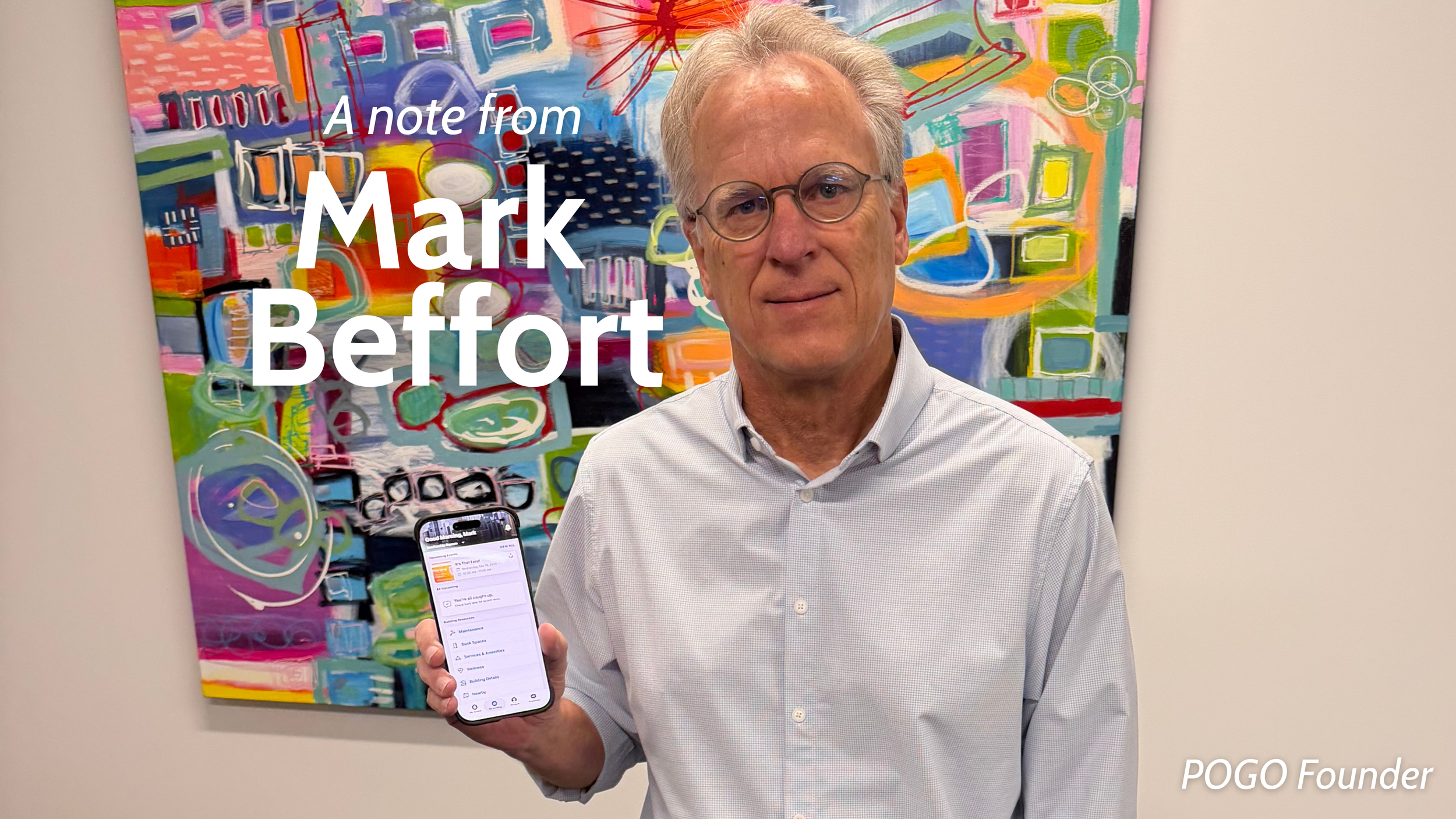
This feature dives into the story behind POGO - how it started, the challenges it set out to solve, and the values that continue to guide its growth. In this candid conversation, POGO’s founder shares the real experiences that inspired the platform: years of firsthand frustration with fragmented tools, manual processes, and rising tenant expectations. You’ll learn how POGO evolved from an internal solution into an industry-wide platform, what lessons shaped its identity as “built by property managers, for property managers,” and how the team stays grounded in the operational realities of their users. At its core, this post explores POGO’s mission to simplify property operations, empower on-site teams, and bring clarity, connection, and confidence back to the world of property management.
What inspired you to start POGO, and what needs did you see in the property management industry?
POGO was born out of years spent overseeing a property management company and watching my teams struggle with the same systemic issues across every asset. It didn’t matter whether the property was large or small, our managers were juggling fragmented tools, manual processes, and communication gaps that held them back from doing their best work. At the same time, tenant expectations were rising fast.
I realized the industry didn’t just need another app—it needed an operational backbone. One unified platform that brought communication, workflows, and engagement together. POGO started as a way to support my own teams, and it quickly became clear that the need extended far beyond our portfolio.
Can you share a defining moment in POGO’s journey that shaped the company’s direction?
One defining moment came early on when we realized how strongly people connected with our identity. Every time we said, “Built by property managers, for property managers,” it immediately resonated. That feedback reinforced something important: our perspective as owners and operators gave us a unique advantage.
That was when we committed to staying true to our identity as solution providers—not just technologists. Everything we build must solve real operational pain for real teams in this field.
How do you stay connected to the needs of your clients and team as the company grows?
Even as we scale, I stay deeply connected to our internal team. I’m heavily involved in the discovery process for new features, the ideation work that shapes our roadmap, and the priority ranking of what the dev team tackles next. I rely on our customer success and product teams, they’re closest to the users, and I stay plugged in to their insights so we’re always building what truly matters. Growth can create distance, but staying close to the team keeps me connected to the real operational needs we’re solving for.
Can you share a story about a challenge you faced as a CEO and how you navigated it?
One of the biggest challenges was transitioning from budling a tool for our own company to building a platform for an entire industry. That meant we had to rethink priorities, re-evaluate workflows that only worked for us, and create a scalable structure and roadmap.
It required patience and willingness to rebuild parts of the product for long-term stability. That period wasn’t easy, but it laid the foundation that allows POGO to grow responsibly today.
What surprised you the most about the journey of growing POGO?
The universality of the challenges. I expect each management company to have its own set of problems, but the opposite was true. Whether it’s a boutique management team or a national operator, the frustrations are almost identical.
Seeing how consistently POGO solves those pain points has been one of the most validating parts of this journey.
What do you want people to feel or experience when they interact with?
I want teams to feel clarity and control. I want tenants to feel connected and cared for. And I want owners to feel confident that their buildings are operating with transparency and efficiency.
Ultimately, I want POGO to feel like a partner, a system that genuinely makes the work easier, not another tool adding complexity.
Is there a personal anecdote or lesson learned that you believe embodies the spirit of POGO?
Commercial property management has been in a transition since 2020. Hybrid schedules, fluctuating occupancy, and the emotional disconnect created by years of remote work changed what tenants expect from buildings. They want more than amenities—they want a sense of belonging.
Meanwhile, property teams have been drowning in fragmented processes. Managers were chasing emails, manually tracking issues, and trying to deliver a higher level of service with tools that simply didn’t support them. Seeing the same issues surface repeatedly through unconnected channels made it clear: the industry needed a reset.
That moment reaffirmed property management isn’t broken, the tools are. And that belief continues to drive every decision we make.
The bottom line:
POGO exists to empower property teams, elevate tenant experiences, and give owners a clear, modern operational infrastructure because Class A buildings deserve Class A tech, and the people who run them deserve tools that finally meet the moment.